Collect fiat payments into named virtual accounts
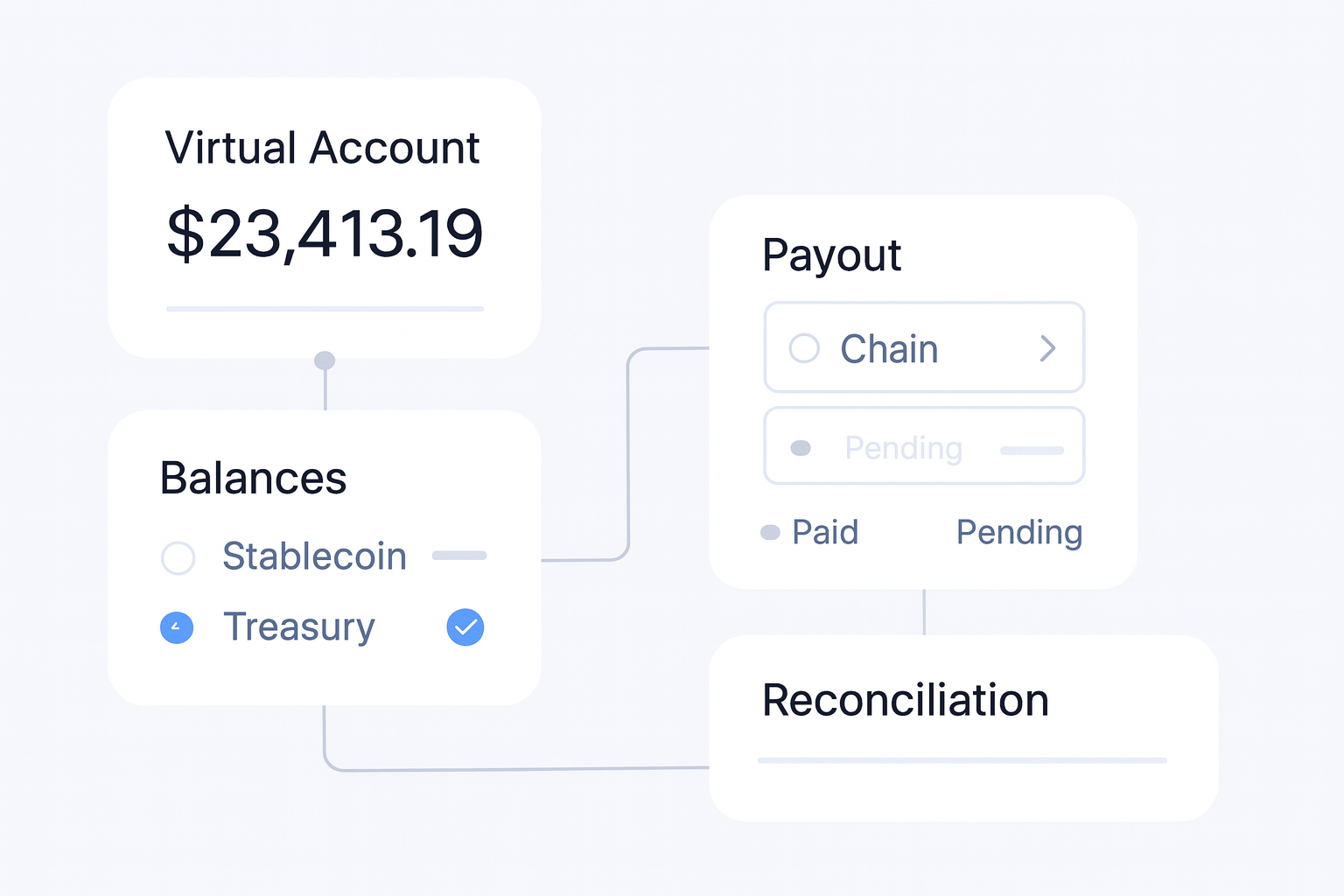
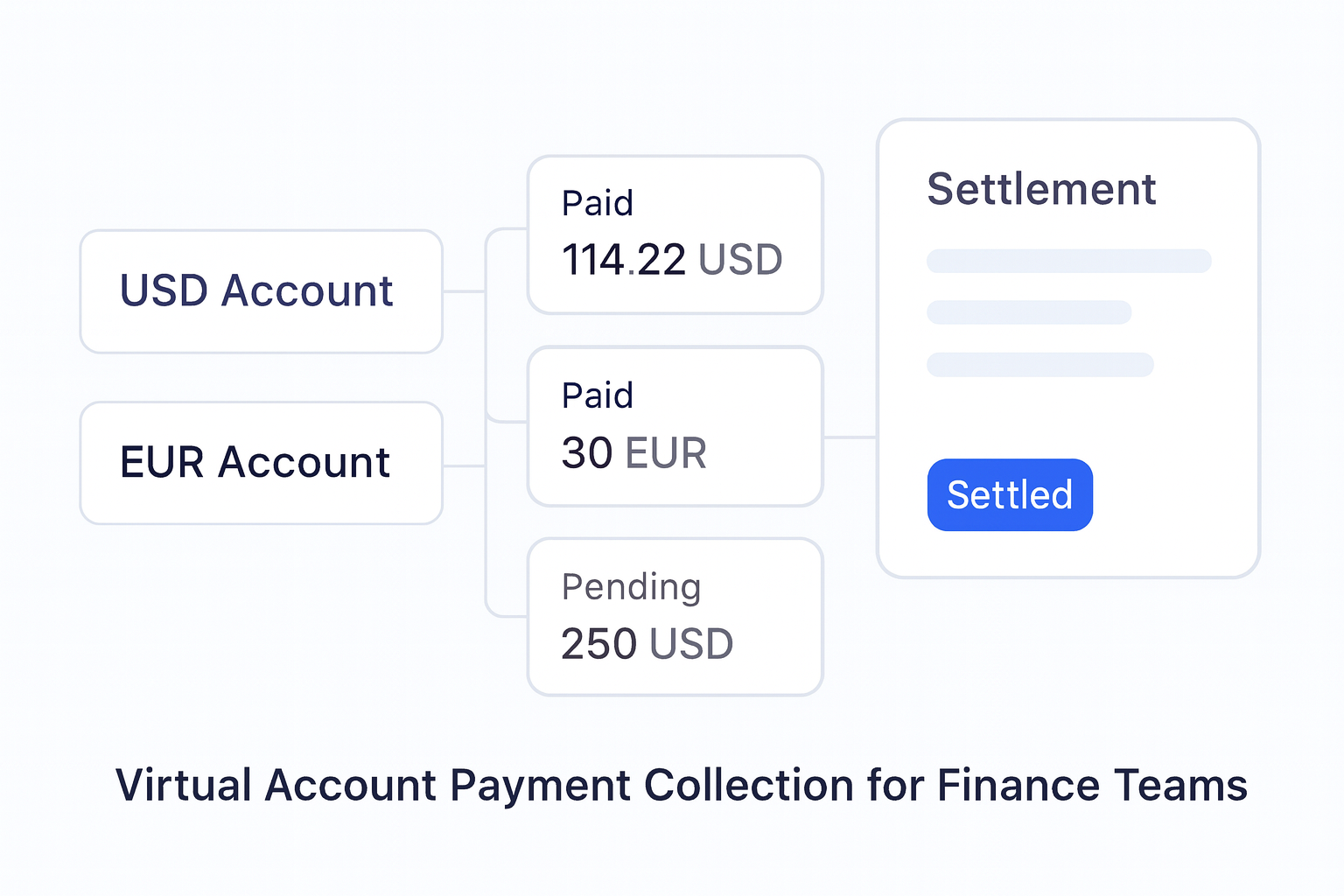
When customers, partners, or counterparties need to pay your business in fiat, named virtual accounts give you a cleaner way to receive funds than pooled collection flows. Radom supports virtual USD and EUR accounts in your business name so your team can collect payments, track incoming funds, and route value into crypto workflows where supported.
This is useful for finance teams that need better reconciliation, founders who want a practical operating layer, and platform operators that move between fiat collection and crypto settlement. If you are comparing options, start with the virtual accounts product page and review pricing before you commit to a workflow.
Where virtual account payment collection fits
Virtual account payment collection is a good fit when you need to receive fiat first and decide what happens next after the funds arrive. Common use cases include customer top-ups, account funding, partner payments, invoice settlement, treasury receipts, and operational float for businesses that work across fiat and crypto.
Radom is built for businesses that need payment acceptance, balance management, settlement, currency conversion, on-ramping, off-ramping, and payout workflows from one platform. That makes it more useful than a single-purpose collection tool when your finance team has to manage more than one rail.
How the workflow works
- Create a named virtual USD or EUR account for the business, team, or use case you want to collect into.
- Share the account details with the sender so incoming fiat lands in the right place.
- Track the incoming payment in Radom and match it to the customer, invoice, or internal workflow.
- Route the balance into crypto settlement or treasury workflows where supported.
- Use the dashboard to review payment and exchange activity with accounting in mind.
If your team needs a programmable flow, the Radom docs are the place to check how the API fits into your payment operations.
Where Radom removes manual work
Finance teams usually spend time on matching payments, checking references, moving balances between systems, and explaining where funds are sitting. Radom reduces that work by keeping the collection, tracking, and settlement view in one place.
Named virtual accounts help senders trust the destination and give your team cleaner accounting than pooled collection flows. The dashboard also displays payment and exchange analytics with detailed accounting so operations teams can keep settlement and reconciliation under control.
For teams that also need to move funds after collection, Radom can connect virtual account receipts to crypto conversion workflows and mass payouts when that is part of the operating model.
Who should use this setup
This page is most relevant if you are a payments team, finance operations lead, founder, platform operator, affiliate network, iGaming operator, creator platform, or subscription business that needs fiat collection and crypto settlement in the same operating flow. It is also relevant for developers evaluating payment infrastructure that has to support both dashboard workflows and API-driven operations.
If your goal is broader payment acceptance rather than account collection, you may also want to review crypto checkout and the main Radom platform.
When to sign up or contact sales
Sign up if you want to evaluate the workflow directly in Radom. Contact sales if you need help scoping collection, settlement, or treasury requirements across multiple teams or payment rails. For cost planning, review pricing first, then speak with sales if your volume or operating model needs a closer look.
Contact sales for help with a collection workflow that needs fiat receipt, conversion, and settlement planning.
Frequently asked questions
What is virtual account payment collection?+
It is the process of receiving fiat payments into a named virtual account so you can track, reconcile, and route funds more cleanly than with a pooled collection setup.
Can Radom collect fiat and settle in crypto?+
Yes, where supported. Radom's virtual accounts page states that businesses can collect fiat payments into named virtual accounts and settle in crypto where supported.
Which currencies are supported for virtual accounts?+
Radom's current virtual accounts page references USD and EUR virtual accounts. Any additional regional or rail-specific support should be confirmed with sales.
Does Radom replace accounting or treasury software?+
No. Radom is payment infrastructure for collection, conversion, settlement, and payout workflows. It can support reconciliation and accounting visibility, but it is not positioned as accounting software.
Is this only for crypto-native businesses?+
No. Radom is built for online businesses and platform operators that need practical payment operations across fiat, stablecoins, and crypto.