
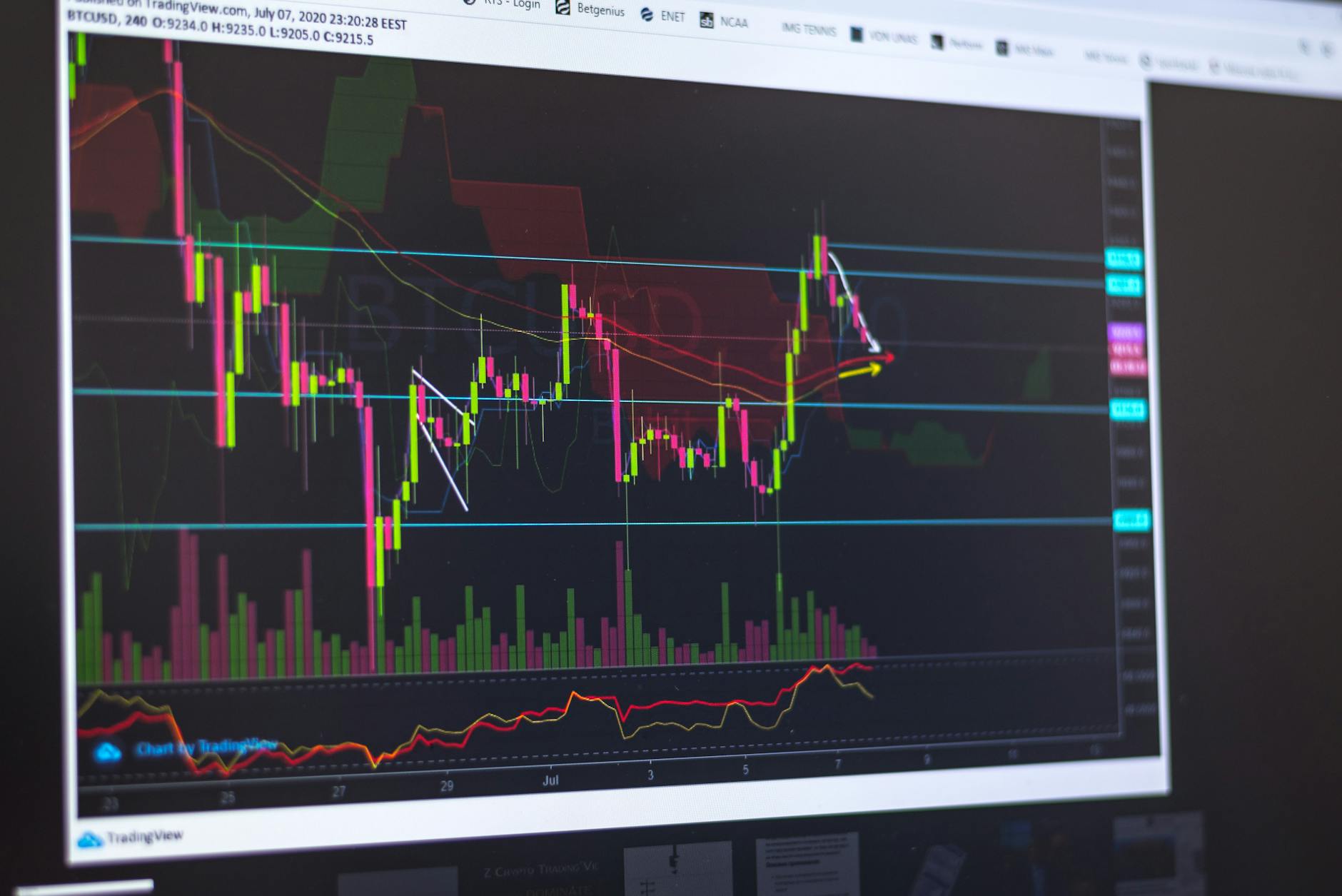
The recent discourse around Bitcoin's trajectory illustrates a fascinating intersection of technical analysis and market sentiment, particularly through the lens of Bollinger Bands. These bands, which have historically acted as a gauge for potential price movements in the cryptocurrency market, now suggest a notable support level for Bitcoin at the $55,000 mark. This insight, stemming from a detailed technical assessment by the analyst known as Sykodelic, challenges the more drastic predictions of a descent to $35,000.
Understanding the significance of Bollinger Bands in this context requires a brief detour into what these bands represent. Essentially, they are a form of statistical chart characterizing the prices and volatility over time of a financial instrument or commodity. The fact that Bitcoin prices have maintained a position above the lower Bollinger Band on a monthly timeframe is significant. It not only suggests a resistance to falling below these levels but also challenges the notion that a severe downturn is imminent, as posited by some of the more bearish forecasts.
The rationale provided by Sykodelic hinges on the historical behavior of Bitcoin. Even in past cycles, such as the notable 2017 surge, Bitcoin did not breach the lower monthly Bollinger Band despite significant retractions. This pattern lends weight to the argument that, without a substantial prior expansion-similar to what was seen in past bull runs-the cryptocurrency is unlikely to experience a drastic contraction.
Contrasting views, however, come from analysts like Jeff Ko of CoinEx, who posits that even a correction to $55,000 might be overestimating the potential fall. Ko's analysis, which you can explore in more detail in this article, suggests that the evolving market structure of Bitcoin, now bolstered by deeper institutional involvement and broader market participation, could mitigate the severity of future downturns.
This divergence in analytical perspectives is not just an academic exercise but has real implications for market participants. For instance, traders relying on technical indicators would interpret these Bollinger Bands as a sign of when to modify their positions, potentially avoiding sale triggers unless the $55,000 threshold is breached. On the other hand, strategic investors might see this as a confirmation that Bitcoin has matured into a more stable asset, less prone to the wild swings seen in its early years.
Such analysis also invariably feeds into broader discussions about the nature of cryptocurrency markets and their susceptibility to the kinds of shocks that have historically led to significant selloffs. Whether this implied stability will hold in the face of macroeconomic variables or geopolitical tensions remains to be seen. However, the current consensus around the $55,000 support level at least provides a temporary anchor for expectations.
In conclusion, while Bollinger Bands are not a crystal ball, their current readings offer a compelling narrative about Bitcoin’s resilience in this cycle. Investors and observers alike would do well to keep a close watch on these technical thresholds as they try to navigate through the often turbulent waters of cryptocurrency investment.

