
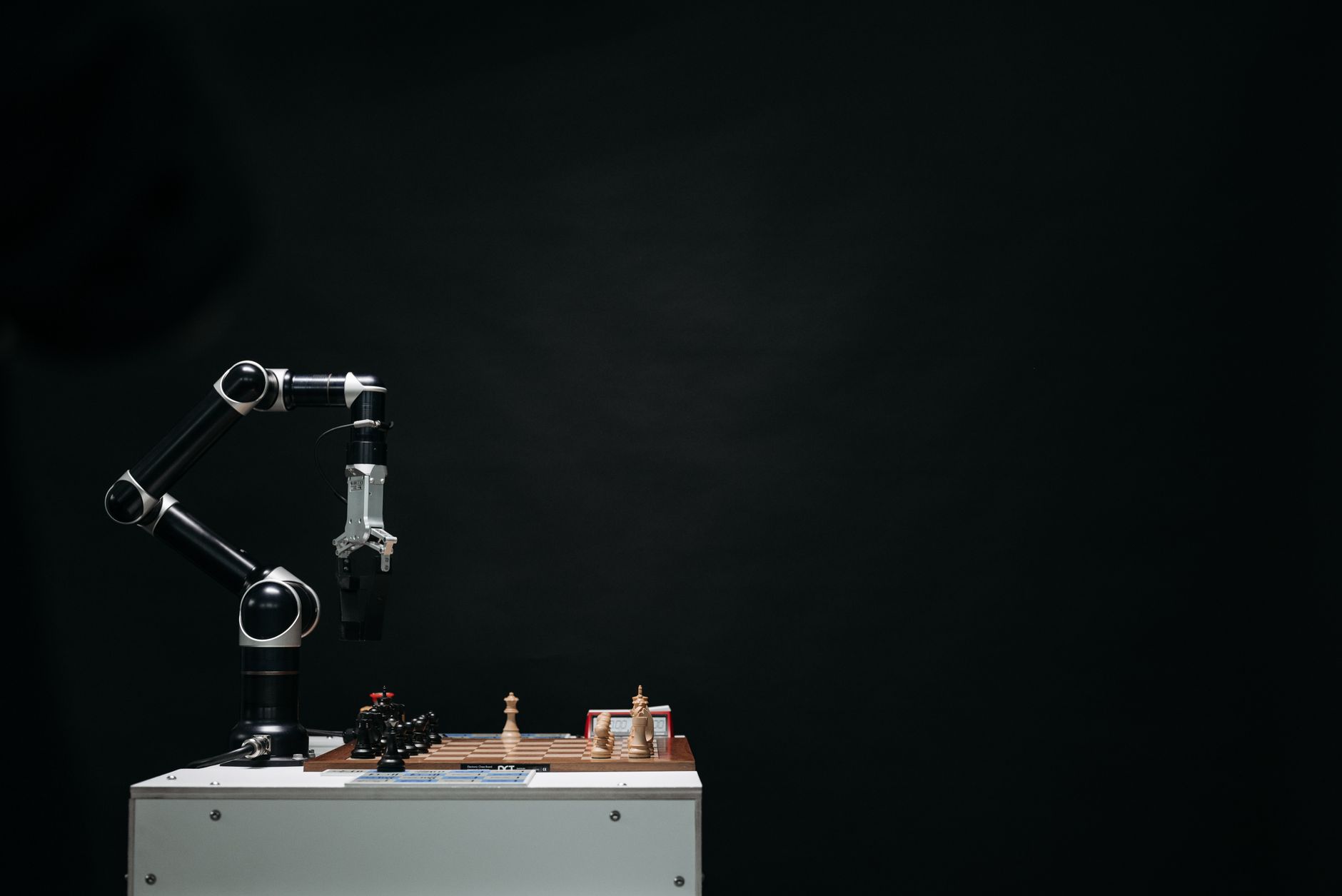
In a maneuver that might shift paradigms across industries, Jean-Baptiste Kempf, once the mastermind behind the ubiquity of VLC Media Player, is now transforming his pioneering vision to the robotics and remote control sectors through his latest venture, Kyber. According to a recent TechCrunch article, Kempf anticipates an imminent future where robotic technology permeates everyday life, akin to the software he famously developed.
At its core, Kyber is built as an infrastructure layer tailored for managing remote devices with real-time precision, an area that promises exponential growth with the advent of physical artificial intelligence. This Paris-based startup, supported by a notable $5 million investment round led by Lightspeed, is poised to address the logistical behemoth of syncing video, audio, sensor data, and controls across potentially millions of devices. The aim is clear: to facilitate instantaneous control and feedback essential for operations ranging from defense to autonomous vehicle navigation.
Kempf’s shift from enhancing digital media consumption to refining robotic operational efficiency piques interest, especially given the VLC’s foundational values of openness and universality. Kyber, while operating on a similar philosophy, endeavors to democratize the complex technology stack needed for sophisticated remote interactions. This suggests not just an extension of Kempf’s prior successes into new domains but a reiterative enhancement of them. Where VLC made multimedia accessible, Kyber might make ubiquitous, seamless machine interaction achievable.
Yet, the stakes are substantially higher. Kempf himself highlights the distinct challenges posed by scaling; managing a fleet of a few thousand is a far cry from orchestrating millions of remote devices. This scale not only demands robust infrastructure but also necessitates superior observability to ensure systems function as intended without the need for constant physical intervention. The implications here extend into strategic operational realms-imagine updating software across a global fleet of drones without needing to recall them to a base station.
True to his roots, Kempf continues to champion open-source frameworks. Kyber’s core project remains accessible to all, which strategically positions the platform at the heart of what could be a sprawling ecosystem. This open approach could catalyze innovation, allowing other developers to build upon Kyber’s foundation much like what happened with VLC. Yet, the enterprise version of Kyber, which includes hands-on support from forward-deployed engineers (FDEs), underscores a tailored strategy aimed at industries that might require bespoke integrations.
What stands out with Kyber is its potential to impact a vast range of sectors due to its foundational technology stack orienting around real-time control. From logistics companies managing fleets of drones to telcos deploying remote maintenance units, the applications are not only broad but deep. Additionally, as remote work continues to ascend, the capabilities of remote IT management and support could become a cornerstone service offered by Kyber, possibly challenging established players like Citrix.
However, while the technology and vision are compelling, the transition from managing digital media to managing physical robots presents unique challenges. Unlike videos which suffer little when there’s a lag, a few milliseconds delay in robotic controls could mean the difference between smooth operation and catastrophic failure. Thus, while Kempf’s track record with VLC suggests a high probability of success, the real-world application of Kyber will be the ultimate litmus test.
As tech enthusiasts and industry analysts alike watch Kyber's journey, the integration of this technology into everyday operations might also prompt a broader discussion on cybersecurity, data privacy, and the ethics of autonomous systems-topics that are increasingly relevant in a hyper-connected world. Kempf’s journey from media to robotics might just be beginning, but its impact could reshape our interaction with technology in profound ways.

